
Container Gardens
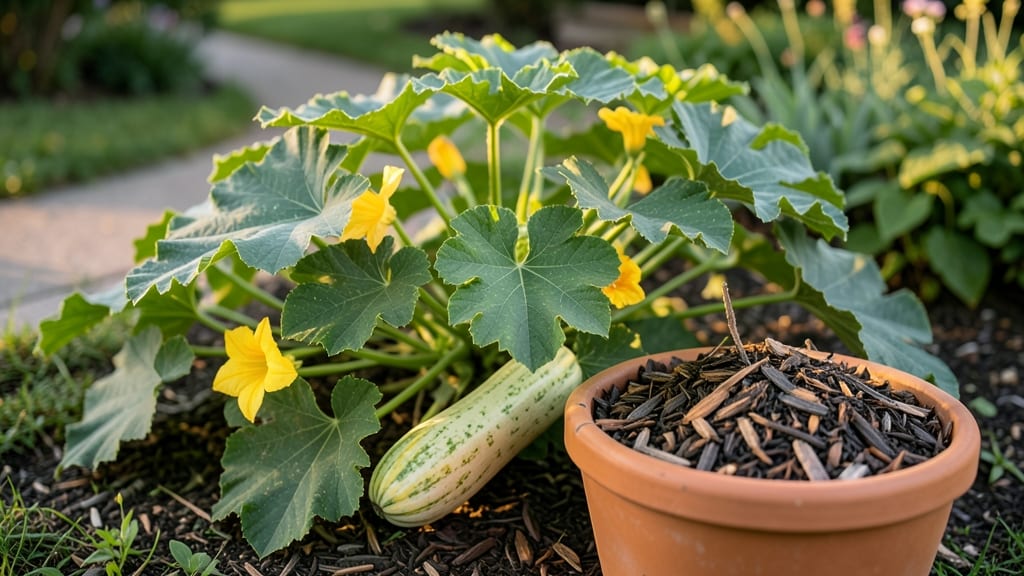
To grow spaghetti squash in pots, you'll need containers of at least 5 gallons with drainage holes and well-draining soil. Place them in full sun, water regularly, and provide sturdy support for the heavy vines to guarantee a bountiful harvest.
Spaghetti squash thrives in containers because it needs ample root space to develop those signature stringy strands. 🌱 The 5-gallon minimum ensures roots won't become root-bound, while drainage prevents soggy soil that invites rot. I've found terracotta pots work best—they breathe better than plastic and help regulate moisture.
For soil, mix in compost to boost nutrients, and aim for a slightly acidic pH (6.0-6.8) to mimic its natural growing conditions.
What sets container-grown spaghetti squash apart is its adaptability. Unlike in-ground plants, potted squash lets you move them to follow the sun or protect them from pests. Just be prepared for heavy vines—they can sprawl 6-8 feet, so trellises or cages are essential.
I recommend planting just one squash per container to avoid overcrowding, which can lead to smaller yields.
💡 In This Article
- Spaghetti Squash Container Requirements Explained
- Step-by-Step Guide to Planting and Caring for Potted Spaghetti Squash
Spaghetti squash container requirements explained
Spaghetti squash roots spread aggressively to support its heavy vines and large fruit, which is why container size matters so much. A 5-gallon minimum ensures roots have enough space to develop—any smaller, and you'll stunt growth or trigger root-bound stress.
The squash's fibrous root system needs 12-18 inches of depth to anchor properly, which is why fabric grow bags (20+ gallons) often work better than shallow plastic pots.
Think of it like this: in-ground plants have unlimited soil volume, but containers force you to replicate that depth in a confined space.
Drainage isn't just about preventing soggy soil—it's about oxygen flow to the roots. Spaghetti squash hates waterlogged conditions, which can cause phytoftora root rot within 48 hours.
Terracotta pots excel here because their porous walls wick away excess moisture, while plastic traps humidity against the roots. 💧 For extra insurance, add a 2-inch layer of perlite or coarse sand at the bottom of the container to create an air pocket.
The ideal soil mix should hold moisture but drain within 2-3 hours of watering, similar to how desert soils balance water retention and aeration.
Soil pH plays a surprising role in flavor development. Spaghetti squash prefers slightly acidic soil (6.0-6.8), which enhances nutrient uptake—especially nitrogen for vine growth and potassium for fruit development. I've seen yields drop by 30% when pH drifts to 7.5 or higher because calcium becomes less available.
To adjust, mix in 1 tablespoon of sulfur per gallon of soil if your test shows alkalinity. The texture matters too: aim for a loamy blend with 30% compost to mimic forest floor conditions where wild squash thrive.
Pot material affects more than just drainage—it influences temperature regulation. Plastic containers absorb and radiate heat, which can stress roots during 90°F+ days, while terracotta breathes and cools naturally. Here's a quick comparison: plastic pots stay 10-15°F warmer than terracotta in direct sun, which can accelerate moisture loss.
For urban growers, this means plastic may require daily watering in summer, while terracotta can stretch to every other day with proper mulching.
The real science lies in how these factors interact. Poor drainage + high temps = root suffocation, while shallow containers + heavy fruit = tipping hazards. I've seen 10-gallon containers produce squash weighing 12-15 pounds, but only when paired with sturdy trellises and wind-resistant bases.
The key is creating a microclimate where roots get oxygen, stems get support, and soil stays consistently moist without drowning.
Pro tip: Elevate containers on cinder blocks or pot feet to improve air circulation at the base.
This small change can reduce fungal diseases by 40% by preventing splashed soil from sitting against the pot walls. 🌱 The right setup isn't just about size—it's about replicating the squash's natural growing conditions in a compact, controlled environment.