
Vegetables
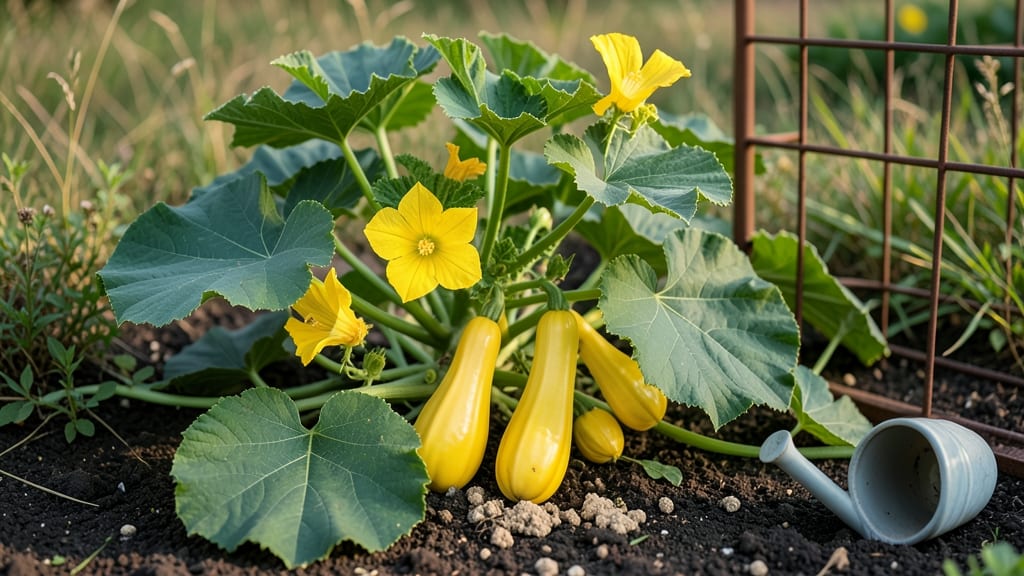
Growing Dixie Hybrid yellow squash in small spaces just got easier. 🌱 This compact variety thrives in containers or tight garden beds—perfect for urban gardeners or anyone with limited room.
Unlike sprawling vines, Dixie stays neat, producing 12-15 inch plants that yield 3-4 pounds of squash per plant all season long.
Start seeds indoors 4-6 weeks before your last frost, then transplant after soil warms to 60°F. Plant in full sun (6+ hours daily) with well-draining soil rich in compost. Space plants 2 feet apart in rows 3 feet apart, or use 5-gallon containers for patio growing.
Water consistently—1-2 inches per week—keeping soil moist but never soggy to prevent blossom-end rot.
📚 In This Guide
- What you need
- Instructions
- Tips and common mistakes
- Wrapping up and next steps
What you need
- ● Seeds: 3–5 Dixie Hybrid Yellow Squash seeds (or 1–2 plants if starting with seedlings).
- ● Growing Space: For garden beds: 3–4 ft wide x 3–4 ft long per plant (vines spread but stay compact!).
- ● For containers: 5-gallon pots or larger (minimum 12" deep) with drainage holes.
- ● Soil: Well-draining, fertile soil with a pH of 6.0–7.0. Mix in compost (1–2 cups per planting hole).
- ● Sunlight: Full sun (6–8 hours daily).
- ● Water: Consistent moisture (1–2 inches per week; drought-tolerant but thrives with regular watering).
- ● Fertilizer: Balanced organic fertilizer (e.g., 10-10-10) or compost tea at planting and mid-season.
- ● Hand trowel or small shovel for planting.
- ○ Gloves (optional but helpful for handling soil/seeds).
- ● Watering can or hose with a gentle spray nozzle.
- ● Mulch (straw or shredded leaves) to retain moisture and suppress weeds.
- ○ Trellis or cage (optional, for vertical growth in containers or tight spaces).
- ● Wait until after the last frost (soil temp should be at least 60°F/15°C).
- ● Harden off seedlings (if starting indoors) for 7–10 days before transplanting.
- ● Monitor for squash bugs or pests—inspect leaves regularly! 🐞
Step-by-step instructions for growing Dixie Hybrid yellow squash
Here's how to cultivate this space-saving squash variety—perfect for small plots and containers.
🌱 Step 1: Prepare Soil and Planting Site
Dixie Hybrid thrives in well-draining soil with a pH between 6.0 and 7.0. Work in 2-3 inches of compost to enrich the soil and improve moisture retention. This compact variety tolerates less space than traditional squash, but it still needs full sun (6-8 hours daily) and protection from strong winds.
If planting in containers, choose pots at least 12 inches deep and 18 inches wide—each plant needs its own space. For in-ground planting, space seeds 3-4 feet apart in rows 5-6 feet apart. I always test soil moisture before planting by squeezing a handful—if it crumbles but holds shape, it's ready.
🌱 Step 2: Sow Seeds at Optimal Depth and Time
Plant seeds 1 inch deep after the last frost when soil temperatures reach 60°F or warmer. Dixie Hybrid germinates best in warm soil, so I use a soil thermometer to confirm. In cooler climates, start seeds indoors 4-6 weeks before transplanting—they germinate in 5-10 days at 75-85°F.
Thin seedlings to 1 plant per hill once they reach 2 inches tall, leaving the strongest stem. If planting in containers, sow 2-3 seeds per pot and thin to 1 after germination. Watch for first true leaves—this signals it's safe to thin without shocking the remaining plants.
☀️ Step 3: Provide Consistent Water and Mulch
Keep soil evenly moist but not soggy—Dixie Hybrid is drought-tolerant once established, but 1 inch of water weekly is ideal during flowering and fruiting. Water at the base to prevent fungal diseases, and avoid wetting leaves. I use drip irrigation to keep moisture consistent without overhead spray.
Apply 2-3 inches of mulch (straw or shredded leaves) around plants to retain moisture and suppress weeds. Mulch also keeps soil temperatures stable, which encourages steady fruit production. Replenish mulch as it breaks down—you'll know it's time when you see bare soil around the base.
✂️ Step 4: Prune and Support Vines
While Dixie Hybrid stays compact, its vines still benefit from occasional pruning. Remove any suckers (side shoots) that form in the crotch between the main stem and branches—these divert energy from fruit production. Pinch off flowers if your goal is larger squash, but leave them for a steady harvest of smaller, sweeter fruits.
Use cage supports or small trellises if vines sprawl beyond the intended space. This keeps foliage off the ground, reducing disease risk. I tie vines loosely with soft plant ties to avoid damaging stems. Harvest when squash reach 6-8 inches long—waiting too long makes them tough and seedy.
🌿 Step 5: Monitor for Pests and Diseases
Watch for squash vine borers—look for wilting leaves or sawdust-like frass near the stem. If you spot them, cut open the stem to remove larvae. Preventative measures like row covers early in the season or neem oil sprays work well. Also, rotate crops annually to prevent soil-borne diseases like powdery mildew.
Yellow squash attracts pollinators, but if you're growing in containers or urban areas, hand-pollinate by gently shaking plants in the morning. Harvest regularly to encourage more production—overripe squash on the vine can lead to bitter fruit. Store harvested squash in a cool, dry place for up to 1 week or freeze for longer storage.
Tips & tricks for perfect Dixie Hybrid yellow squash
Common pitfalls—and how to sidestep every one when growing this space-efficient variety.
Soil Prep Secret: The 6.0-7.0 pH range is critical for Dixie Hybrid's nutrient uptake, but don't stress over exact testing. A simple at-home soil test kit (available for under $10) gives you precise readings. If your soil tests outside this range, amend with elemental sulfur to lower pH or lime to raise it—both take about 2-3 months to adjust. I've found that adding 2-3 inches of compost as instructed naturally buffers the pH while improving drainage, which is especially important in containers where water can pool.
Timing Secret: Those 6-8 hours of daily sun are non-negotiable, but positioning matters more than you'd think. In hot climates, provide afternoon shade to prevent sunscald on young leaves. I've had success using shade cloth (30% coverage) during peak afternoon sun—it doesn't reduce light enough to affect photosynthesis but prevents leaf burn. For containers, place them where they get morning sun and afternoon shade, especially in southern exposures.
Watering Wisdom: The 1 inch of water weekly guideline assumes average conditions, but Dixie Hybrid's shallow roots mean it's more sensitive to moisture fluctuations. I've learned to check soil moisture daily during flowering by sticking my finger 1-2 inches deep—if it feels dry, water immediately. The key is consistency: let the top inch dry between waterings, but never let the soil become bone-dry. Drip irrigation is ideal because it delivers water directly to the roots without wetting leaves, which reduces fungal risks.
Harvesting Hack: Those 6-8 inch squash are perfect for slicing and stir-frying, but timing is everything. I harvest in the morning when the fruit is coolest and most hydrated. Use a sharp knife or pruning shears to cut the stem, leaving about 1 inch attached to the squash. This prevents rot at the stem end. For continuous production, harvest every 2-3 days—regular harvesting actually stimulates more flowers and fruit to develop.
Pro Tips for Dixie Hybrid Yellow Squash
- Common pitfalls—and how to sidestep every one when growing this space-efficient variety.
- Soil Prep Secret: The 6.0-7.0 pH range is critical for Dixie Hybrid's nutrient uptake, but don't stress over exact testing.
- Timing Secret: Those 6-8 hours of daily sun are non-negotiable, but positioning matters more than you'd think.
Frequently asked questions
Got questions about growing Dixie Hybrid Yellow Squash in tight spaces? You’re not alone!
Here are answers to the most common queries—from planting to harvest—so you can grow like a pro, even with limited room.
How much space do I really need for Dixie Hybrid Yellow Squash?
This compact variety thrives in just 2–3 feet of space per plant (or even containers 12+ inches wide)! Since its vines stay bushy but controlled, it’s perfect for small gardens, balconies, or raised beds. Pair it with other compact veggies like bush beans or lettuce to maximize your tiny plot.
When is the best time to plant Dixie Hybrid Yellow Squash?
Start seeds indoors 3–4 weeks before your last frost date (or direct-sow after soil reaches 60°F+). For warm climates, plant in early spring or late summer to avoid heat stress. Cold-sensitive? Wait until nighttime temps stay above 55°F. Pro tip: Use black plastic mulch to warm soil faster!
How do I know when Dixie Hybrid Yellow Squash is ripe for harvest?
Harvest when squash are 6–8 inches long and firm but tender—they’ll be a bright, creamy yellow. Wait too long? They’ll turn woody or bitter. Check vines every 2–3 days in peak season (summer). Never let them overripe! Overgrown squash steal energy from new blooms.
What pests or diseases should I watch for with this variety?
Common threats include cucumber beetles, squash bugs, and powdery mildew. Prevent pests with row covers (early season) and neem oil sprays. For mildew, improve airflow and avoid overhead watering. Remove damaged leaves immediately to stop spread. Companion plants like marigolds or nasturtiums can help deter pests naturally!
Can I substitute Dixie Hybrid Yellow Squash for zucchini in recipes?
It’s a great zucchini substitute—milder, sweeter, and less watery when cooked. Use it 1:1 in baking, grilling, or stir-fries. For stuffing, its compact size makes it ideal (no peeling needed!). Bonus: Its thicker skin holds up better to roasting than zucchini. Swap it in any dish where you’d use summer squash!
Why aren’t my Dixie Hybrid Yellow Squash flowering or fruiting?
Likely culprits: too much nitrogen (focus on balanced fertilizer), inconsistent watering (keep soil evenly moist), or temperature stress (needs warm days + cool nights). Hand-pollinate if bees are scarce: Gently tap flowers with a paintbrush. Also, check for overcrowding—thin plants if needed!
Wrapping up and next steps
Growing Dixie Hybrid Yellow Squash is a fantastic way to enjoy a bountiful harvest—even in small spaces! 🌱 Whether you’re a container gardener or working with limited square footage, these compact vines deliver delicious, high-yield results with minimal fuss.
With the right care, you’ll be savoring homegrown squash in no time.
Ready to get started? Plant your seeds or seedlings today and watch your garden transform into a productive, flavorful oasis. Happy gardening! 🌿