
Pests and Diseases
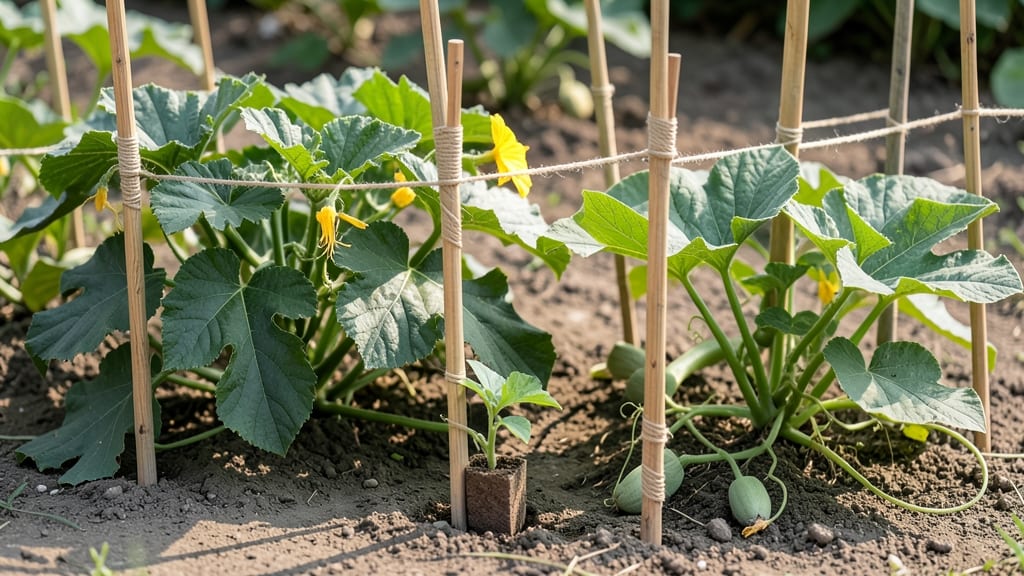
Planting squash and zucchini together works because they share similar care needs and attract the same pollinators, like bees, which boosts fruit production. 🌱 However, their sprawling vines create dense foliage that traps moisture, creating ideal conditions for fungal diseases like powdery mildew.
The 3–5 foot spacing isn’t just about giving roots room—it’s about airflow. I’ve seen gardens where squash and zucchini thrived side-by-side when planted in raised beds with proper spacing, but ground-level plantings often struggled with disease pressure.
For small gardens, consider interplanting with pest-repelling herbs like basil or marigolds to create a natural buffer.
Another key factor is soil health. Both plants are heavy feeders, so enriching the soil with compost before planting helps prevent nutrient competition. If you’re short on space, try vertical gardening—trellising zucchini varieties like 'Black Beauty' can save ground space while keeping vines elevated for better airflow.
Just remember: while they’re great companions, they’re not immune to shared pests like squash bugs, so monitor them closely during the growing season.
💡 In This Article
- Why Squash and Zucchini Thrive as Garden Companions
- Optimal Spacing and Layout for Squash-Zucchini Gardens
Why squash and zucchini thrive as garden companions
Squash and zucchini belong to the same botanical family—Cucurbitaceae—and share many ecological traits that make them excellent garden neighbors. Both plants rely on similar pollinators, particularly bees, which are drawn to their bright yellow flowers. 🌼 This mutual attraction increases pollination efficiency, leading to higher fruit yields.
Studies show that gardens with diverse cucurbits (like squash, zucchini, and pumpkins) can see a 20-30% increase in pollination success compared to monoculture plantings, thanks to the sheer volume of flowers attracting more pollinators.
Their growth habits also create a natural pest-repellent system. Zucchini plants, for instance, emit volatile organic compounds that deter squash bugs—a common pest for both crops. When planted together, the combined scent confuses these pests, making it harder for them to locate and lay eggs.
However, this benefit comes with a trade-off: their sprawling vines create dense canopies that trap moisture, creating ideal conditions for fungal diseases like powdery mildew. This is why proper spacing isn’t just about root competition—it’s about airflow and disease prevention.
From a soil perspective, both plants are heavy feeders that benefit from similar growing conditions. They thrive in well-draining, compost-rich soil with a pH between 6.0 and 7.0.
When planted together, their combined root systems help break up compacted soil and improve drainage over time. 🌱 The key is to amend the soil with organic matter before planting, as their rapid growth can quickly deplete nutrients.
I’ve noticed that gardens using raised beds with these companions often see better soil structure and less compaction compared to ground-level plantings.
However, their shared vulnerabilities can’t be ignored. Both squash and zucchini are susceptible to the same diseases, including cucumber mosaic virus and downy mildew. The dense foliage created by planting them together can accelerate the spread of these pathogens.
This is why many organic gardeners choose to separate them by at least 3 feet, even if they’re planted in the same garden bed. The trade-off between companion benefits and disease risks is a delicate balance that depends on your specific growing conditions and disease pressure in your area.
One often-overlooked advantage is their shared tolerance for heat and drought once established. Both plants develop thick, waxy leaves that help retain moisture, making them more resilient in hot climates.
This shared trait means they can be planted together in succession to extend your harvest season, as they’ll mature at similar rates under the same conditions. For example, planting 'Yellow Crookneck' squash alongside 'Eight Ball' zucchini ensures both crops reach peak production around the same time, maximizing your garden’s efficiency.
For gardeners working with limited space, consider planting bush varieties of squash (like 'Bush Delicata') alongside compact zucchini types (such as 'Patio Star'). These varieties grow more upright and require less horizontal space, reducing the risk of disease while still benefiting from their companion planting advantages.
The key is to prioritize airflow and monitor for early signs of disease—catching powdery mildew before it spreads can mean the difference between a thriving garden and a lost harvest.