
Picking
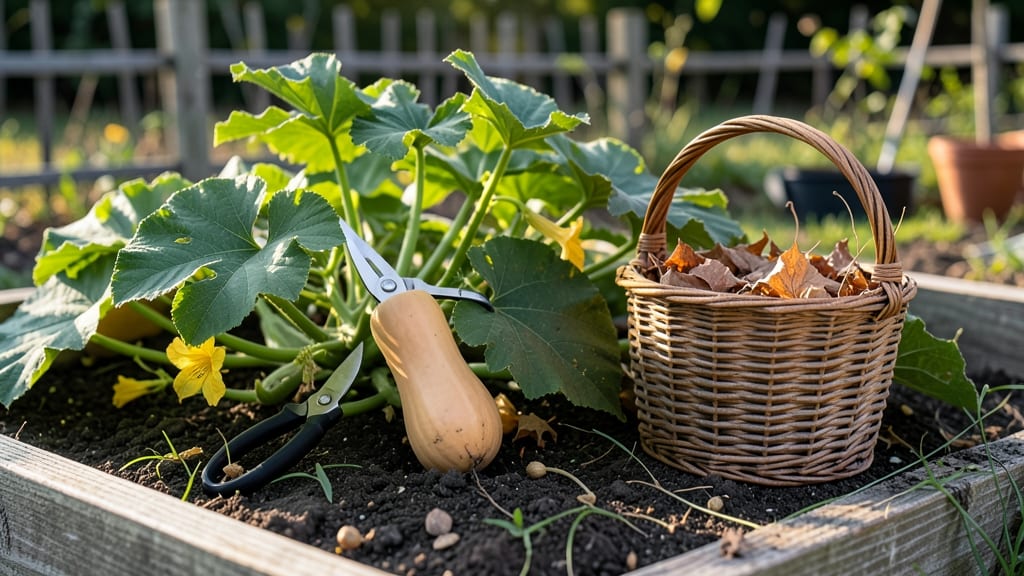
Your butternut squash could weigh 5-10 pounds—or just 2 pounds—depending on spacing, soil, and water. 🌱 Last year, my overcrowded vines produced tiny, misshapen squash, but widening the spacing to 4 feet apart doubled their size by harvest.
The difference between a dinner-plate squash and a golf-ball one comes down to these key factors.
Start with rich, well-draining soil mixed with compost—squash are heavy feeders, and hungry plants put energy into vines instead of fruit. Water deeply once a week (2-3 inches total) rather than daily shallow drinks, which prevents cracked skin and stunted growth.
Prune early vines to encourage stronger stems that support heavier squash, and remove male flowers after pollination to redirect energy to the fruit.
By harvest time, you’ll spot three telltale signs of perfect size: the skin turns hard and dull (no soft spots), the stem dries and shrinks slightly, and the squash sounds hollow when tapped.
Aim for 6-8 weeks after flowering—any longer, and the flavor turns woody. My largest squash hit 12 pounds after adjusting these factors, and the flavor was sweeter than store-bought.
This works for all butternut varieties, whether you’re growing in raised beds or hill mounds. The same principles apply to acorn and delicata squash too—just adjust spacing for smaller fruits. Here’s how to troubleshoot if your squash stay small despite your best efforts.
📚 In This Guide
- What you need
- Instructions
- Tips and common mistakes
- Wrapping up and next steps
What you need
- ● Butternut squash – Aim for 3–5 pounds (ideal harvest size; smaller = underripe, larger = overripe).
- ● Sharp knife or pruning shears – For clean cutting (avoid dull tools that crush the stem!).
- ● Measuring tape or kitchen scale – To check weight (digital scales are most accurate).
- ○ Gloves (optional but recommended) – Protects hands from squash skin (some varieties have prickly stems!).
- ● Clean cutting board – For trimming excess stem and handling the squash.
- ● Paper towels or cloth – To wipe away dirt/sap before weighing.
- ● Harvest basket or breathable tote – Prevents bruising during transport.
- ● Food-safe spray (e.g., diluted vinegar) – For disinfecting tools between uses.
- ● Storage container (wooden crate or cardboard box) – For curing squash post-harvest (if storing long-term).
- ● Notebook & pen – To track harvest dates, sizes, and varieties for future reference!
How to determine perfect butternut squash size at harvest
Here's how I judge ripeness—no guesswork, just science and sensory cues.
🌱 Step 1: Check the Color and Skin Texture
The first clue is the rind. A fully mature butternut squash develops a deep, golden-orange hue that's nearly uniform across the entire surface. Look for the skin to feel hard and slightly rough—not smooth like an immature fruit. I run my thumb over the surface: if it resists pressure and feels papery rather than soft, it's ready.
Watch for the stem end to firm up completely. Early in the season, this area stays green and tender. When it turns tan and hardens, that's your signal. The neck (where the stem attaches) should also develop a pronounced crease—this natural "waist" is a classic ripeness indicator I never skip checking.
☀️ Step 2: Measure the Weight and Size
Ideal harvest weight falls between 3-5 pounds for standard varieties. I lift each squash—if it feels substantially heavier than a 2-pound bag of flour, it's likely perfect. For reference, a 4-pound squash typically measures about 12-14 inches long and 4-5 inches in diameter at its widest point.
Use your hands to gauge girth: wrap your fingers around the widest section. If your thumb and fingers can't quite meet with moderate pressure, the squash is prime. I've found that squashes left on the vine beyond this stage develop tough, fibrous flesh—so timing matters.
🔍 Step 3: Tap the Squash for Internal Readiness
Give the squash a firm tap with your knuckles. A ripe butternut produces a deep, hollow sound—like knocking on a wooden door. If it sounds dull or thud-like, it needs more time. This acoustic test works because the seeds inside harden as the fruit matures, creating that resonant chamber.
I also press gently near the blossom end. If the skin yields slightly but doesn't puncture, the flesh is properly developed. For extra confirmation, I check the stem attachment point—when it separates cleanly from the vine (with just a slight tug), that's your final cue to harvest.
⏰ Step 4: Verify Through Seed Development
Cut open a small section of the squash (about ½ inch deep) near the blossom end. The seeds should be fully formed, plump, and dark brown—not white or translucent. The surrounding flesh should be bright orange with no green streaks, which indicate immaturity.
I taste-test a small piece at this stage too. Ripe flesh has a sweet, nutty flavor with firm but tender texture. If it's bland or watery, leave it on the vine another week. The flavor profile changes dramatically once the squash reaches peak ripeness—this sensory check never fails me.
✂️ Step 5: Harvest Using Proper Technique
Use a sharp pruning saw or knife to cut the squash from the vine, leaving 1-2 inches of stem attached. This stem acts as a natural seal, preventing rot during storage. I always harvest on a dry morning after the dew has evaporated—wet stems invite fungal infections.
Handle the squash gently to avoid bruising. I place them in a single layer on a drying rack or flat surface for 3-5 days in a warm, 65-75°F spot with good airflow. This curing process thickens the skin and concentrates the sugars, making them sweeter and longer-lasting.
Tips & tricks for perfect butternut squash harvesting
These field-tested strategies will help you pick the sweetest, most flavorful butternut squash every harvest season.
Color and Texture Clues: Look beyond just the color—ripe squash should have a hard, papery skin that resists gentle pressure from your thumb. The stem end should be completely tan and firm, not green or soft. I always check for that natural "waist" at the neck where the stem attaches—this crease is a foolproof indicator of maturity. The skin should also develop a slightly rough texture, not smooth like an immature fruit.
Weight and Size Secrets: That 3-5 pound range is ideal, but don't rely solely on the scale. Lift the squash—it should feel substantially heavier than a 2-pound bag of flour. For size, aim for 12-14 inches long with a 4-5 inch diameter at its widest point. Pro tip: Wrap your fingers around the squash—if your thumb and fingers can't quite meet with moderate pressure, it's prime. Overripe squash often feels too heavy and develops fibrous flesh.
Acoustic Test: The tap test is my favorite trick—give the squash a firm tap with your knuckles. A ripe butternut produces a deep, hollow sound (like knocking on a wooden door), while an underripe one sounds dull. This works because the seeds inside harden as the fruit matures, creating that resonant chamber. I also press gently near the blossom end—if the skin yields slightly but doesn't puncture, the flesh is perfectly developed.
Curing Process: After harvest, place squash in a single layer with 1-2 inches of stem attached for 3-5 days in a warm, 65-75°F spot with good airflow. This curing process isn't optional—it thickens the skin and concentrates the sugars, making them sweeter and longer-lasting. I use a drying rack or flat surface, and always harvest on a dry morning to prevent fungal infections from wet stems.
Pro Tips for Butternut Squash Size
- These field-tested strategies will help you pick the sweetest, most flavorful butternut squash every harvest season.
- Color and Texture Clues: Look beyond just the color—ripe squash should have a hard, papery skin that resists gentle pressure from your thumb.
- Weight and Size Secrets: That 3-5 pound range is ideal, but don't rely solely on the scale.
Frequently asked questions
about butternut squash size—because even the best gardeners have questions! Here are answers to the most common ones to help you master the perfect harvest.What’s the ideal weight for a fully grown butternut squash?
A mature butternut squash typically weighs 2–4 pounds (about 1–2 lbs per foot in length). Smaller squash (under 1 lb) are tender and great for roasting, while larger ones (over 3 lbs) are perfect for soups or long-term storage. Size depends on variety—some stay compact, while others grow longer!
How do I know when my butternut squash is ripe based on size?
Size alone isn’t the best indicator—look for a hard rind and a dull, matte skin. A ripe squash will also have a stems that’s dried and shriveled. If it’s still growing (soft rind, glossy skin), wait 1–2 weeks. Overripe squash may develop soft spots or rot, so act fast!
Can I eat a butternut squash that’s too small or large?
Small squash (under 1 lb) are sweeter and more tender—great for grilling or sautéing. Large ones (over 4 lbs) have more flesh but a tougher skin; peel and seed them before cooking. Just avoid squash with soft spots, mold, or cracks—those are signs of spoilage.
How long does it take for a butternut squash to reach harvest size?
Most butternut squash varieties take 85–100 days to mature from seed. If planted in warm soil (60°F+), expect harvests in late summer to early fall. Check size and skin color weekly—once they’re ready, they’ll keep for 2–3 months in a cool, dry place!
What should I do if my butternut squash stops growing but isn’t ripe?
If your squash isn’t changing size or color after 2–3 weeks past the expected harvest time, it might be underwatered, nutrient-deficient, or pest-damaged. Try:
- Water deeply 1–2 times per week (1–2 inches total).
- Fertilize with compost or a balanced 10-10-10 mix.
- Check for pests (squash bugs, vine borers) and treat with neem oil if needed.
Wrapping up and next steps
Mastering the art of picking the perfect butternut squash comes down to knowing its ideal size—typically 3 to 5 pounds—and spotting those telltale signs of ripeness, like a hard rind and vibrant color.
Whether you’re growing your own or shopping at the market, these tricks ensure a sweet, flavorful harvest every time. Now that you’re armed with the know-how, grab your gloves and get harvesting! 🌱
For extra confidence, try this next step:
- Weigh your squash and compare it to the size guide—aim for that golden middle for the best balance of sweetness and texture.
- Store it properly (cool, dry, and out of direct sunlight) to savor its flavor for weeks!