
Diseases
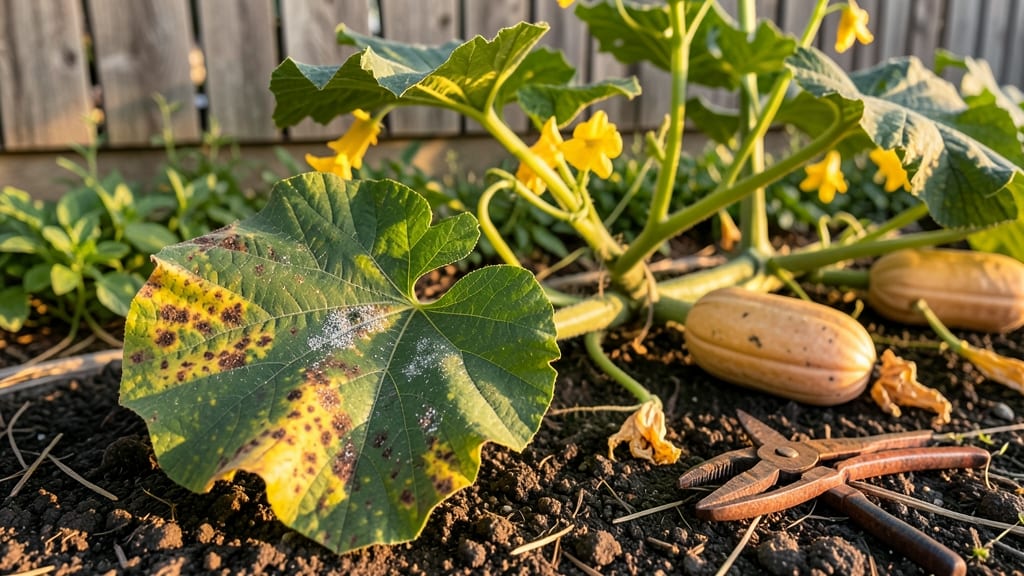
Butternut squash plant diseases can turn your harvest from golden bounty to wilted disappointment—but I've learned to spot the warning signs before they spread. 🌱 The key is knowing what to watch for: yellowing leaves, strange spots, or vines that suddenly collapse.
These aren't just random problems; they're signals your plants are fighting something you can stop early.
Most issues start with moisture—too much rain or poor airflow creates the perfect breeding ground for powdery mildew or downy mildew. I've seen bacterial wilt strike when squash vines touch infected soil, and once it sets in, there's no cure.
The good news? Healthy plants resist better, and a few simple habits—like rotating crops and removing debris—keep problems from taking hold in the first place.
You'll catch diseases before they ruin your crop by checking leaves weekly for white powder (mildew) or water-soaked patches (bacterial infections). At the first sign, prune infected areas immediately and treat with neem oil or copper spray.
The goal isn't perfection—it's giving your squash the best shot at thriving through the season.
This works for both backyard gardens and larger plots, though container growers have an edge—they can move plants to drier spots faster. Early action turns potential disasters into just another season of healthy, plump butternuts ready for the table.
Root Causes Behind Squash Woes
Butternut squash plants, like all cucurbits, are susceptible to a range of diseases due to their delicate balance of environmental needs, genetic vulnerabilities, and microbial interactions. Understanding why these issues arise is the first step in prevention.
Below, we break down the key factors that create the perfect storm for squash diseases—so you can nip them in the bud before they spread.
Butternut squash thrives in warm, well-drained soil with consistent moisture—but even ideal conditions can turn sour if disrupted. Here’s how environmental factors set the stage for disease:
- Excess Moisture & Poor Drainage
Squash plants need water, but soggy soil is a breeding ground for fungal pathogens like Phytophthora (which causes root rot) and Pythium.
Overwatering or heavy clay soil traps moisture at the roots, weakening defenses. Why it matters: Fungi thrive in anaerobic (low-oxygen) conditions, and squash roots suffocate, becoming easy targets.
- Extreme Temperature Swings
Butternut squash prefers daytime temps of 70–85°F (21–29°C) but struggles when nights dip below 50°F (10°C). Cold stress slows growth, making plants more susceptible to Alternaria leaf spot or powdery mildew. Why it matters: Chilled leaves can’t produce enough protective waxes, and pathogens exploit the weakened cell walls.
- Crowded Plantings & Poor Airflow
Squash vines sprawl, but if they’re packed too closely, humidity builds up between leaves, creating a damp microclimate. This is a golden ticket for powdery mildew (Podosphaera xanthii) and downy mildew (Pseudoperonospora cubensis). Why it matters: Stagnant air prevents evaporation, keeping spores alive and spreading faster.
💡 Pro Tip: Space squash plants 3–4 feet apart and use trellises to elevate vines—this improves airflow and reduces humidity at leaf level.
Diseases don’t just happen—they’re caused by specific microbes that exploit weaknesses in your squash. Here’s how they gain a foothold:
- Fungal Spores in Soil or Wind
Pathogens like Fusarium (wilt) or Cercospora (leaf spot) survive in soil or hitchhike on wind currents. Why it matters: If your soil was previously home to infected cucurbits (e.g., zucchini, pumpkins), spores may linger for years, waiting for the right conditions to attack.
- Bacterial Hitchhikers from Tools or Seeds
Bacterial diseases like Erwinia (soft rot) spread via contaminated pruners, water droplets, or even infected seeds. Why it matters: Bacteria multiply rapidly in wounds (e.g., from harvesting or pests), turning healthy tissue to mush in days.
- Viral Spread via Insect Vectors
Viruses like Cucumber mosaic virus (CMV) are spread by aphids, which feed on infected plants and transmit the virus while moving to healthy ones. Why it matters: Once a plant is infected, the virus spreads systemically, stunting growth and deforming fruit.
🔥 Key Insight: Most diseases enter through wounds or natural openings (like stomata on leaves). Reducing stress (e.g., proper watering, pest control) makes your squash less appealing to invaders.
Just like humans, squash plants have a defense system—but it can be compromised by poor nutrition or genetic factors. Here’s how:
- Nutrient Deficiencies (Especially Potassium & Calcium)
Potassium strengthens cell walls, while calcium prevents blossom-end rot (which opens doors for secondary infections). Why it matters: Deficient plants produce weak vines and thin leaves, making them easier targets for pathogens.
- Over-Fertilization with Nitrogen
Too much nitrogen promotes leafy growth over roots, leaving plants top-heavy and prone to collapse. Why it matters: Weak root systems can’t absorb water or nutrients efficiently, increasing stress and disease risk.
- Genetic Susceptibility in Varieties
Some butternut squash cultivars are bred for disease resistance (e.g., ‘Waltham’), while others are more vulnerable. Why it matters: If you’re growing heirloom or less-resistant varieties, they may lack natural defenses against local pathogens.
🌡️ Science Note: Healthy squash plants with balanced nutrients can tolerate some pathogen presence without showing symptoms—think of it like a strong immune system fending off colds.
🎯 Bottom Line: Diseases strike when three factors align: a susceptible host (your squash), a virulent pathogen, and favorable conditions (moisture, warmth, stress). By addressing these root causes—whether through better spacing, soil health, or variety selection—you can dramatically reduce outbreaks.
Quick Fixes for Common Squash Ailments
Now that you know the signs and causes, let’s tackle these butternut squash diseases head-on with practical, garden-proof solutions. Prevention is key, but when trouble strikes, these steps will help you restore your plants to peak health—without losing your harvest.
Cause: Fungal spores thrive in humid, crowded conditions. Solution:
- Prune for airflow 🌬️: Thin out vines to improve circulation. Aim for 12–18 inches between plants.
- Spray preventive fungicide 🍄: Use a mix of 1 tsp baking soda + 1 tsp horticultural oil + 1 quart water (spray undersides of leaves every 7–10 days).
- Water at the base 💧: Avoid wetting foliage; morning watering lets leaves dry faster.
- Remove infected leaves 🗑️: Toss them in the trash (not compost) to stop spore spread.
Prevention Tip: 💡 Plant butternut squash in full sun (6+ hours/day) and space vines 3–4 feet apart.
Cause: Cool, wet weather + poor drainage = fungal feast. Solution:
- Drainage first 🚿: Amend soil with compost or perlite to improve water flow. Elevate beds if soil is clay-heavy.
- Copper fungicide spray 🛡️: Apply copper-based fungicide (like CuPro) every 10–14 days at the first sign of yellowing.
- Rotate crops 🌱: Avoid planting squash in the same spot for 3+ years to break the fungal cycle.
- Use row covers 🛡️: Lightweight fabric shields seedlings until plants are established (remove when flowers appear for pollination).
Pro Tip: ✨ Neem oil (1 tbsp + 1 quart water + drop of dish soap) can also deter downy mildew—spray in the evening.
Cause: Soil-borne bacteria enter through wounds (e.g., pruning, insects). Solution:
- Sterilize tools 🔪: Clean pruners with 70% rubbing alcohol between cuts.
- Remove infected plants ⚰️: Do not compost—bag and discard to prevent spread.
- Rotate crops aggressively 🌿: Wait 5+ years before replanting squash in the same bed.
- Improve soil health 🌱: Add compost + mycorrhizal fungi to boost plant resilience.
- Avoid overhead watering 💦: Use drip irrigation to keep foliage dry.
Warning: 🚨 No cure exists for bacterial wilt—focus on prevention and quick removal.
Cause: Larvae tunnel through stems, cutting off water/nutrients. Solution:
- Check stems daily 🔍: Look for sawdust-like frass or wilting vines. Split stems to spot larvae.
- Handpick larvae 👨🍳: Use tweezers to remove them (drop in soapy water).
- Wrap stems 🛡️: Cover young plants with cardboard collars (cut slits for growth) to block adults.
- Apply diatomaceous earth 🌊: Sprinkle food-grade DE around the base (reapply after rain).
- Plant trap crops 🌱: Interplant with bush beans to lure borers away.
Prevention Tip: 💡 Rotate planting locations yearly to confuse borers.
Cause: Spread by aphids or infected seeds/tools. Solution:
- Remove infected plants immediately 🗑️: Burn or trash them—no composting.
- Control aphids 🐜: Spray with soapy water (1 tsp mild soap + 1 quart water) or introduce ladybugs.
- Disinfect tools/seeds 🧼: Soak in bleach solution (1:10 ratio) for 10 minutes between uses.
- Use reflective mulch 🌈: Silver plastic mulch deters aphids by confusing them with light.
- Avoid planting near susceptible crops 🚫: Keep squash away from cucumbers, melons, and peas.
Pro Tip: ✨ Sticky traps (yellow cards) near plants can catch aphids before they spread virus.
- Boost nutrition 💪: Feed with compost tea or a balanced fertilizer (10-10-10) to strengthen immunity.
- Mulch heavily 🍂: Use straw or grass clippings to retain moisture and deter soil-borne pathogens.
- Monitor weather 🌦️: Avoid planting in low-lying areas where cold air (and fungi) settles.
Final Reminder: 🎯 Act fast—early intervention saves more plants than last-minute fixes. With these strategies, your butternut squash will bounce back stronger, ready for a bountiful harvest!
Frequently asked questions
How can I tell if my butternut squash has powdery mildew vs. downy mildew?
Powdery mildew appears as white, powdery patches on the upper leaf surfaces, while downy mildew shows up as yellow spots on top and fuzzy gray growth on the undersides. Both thrive in humid conditions, but powdery mildew is more common in warm, dry weather, while downy mildew needs cooler, wetter conditions to spread.
Can I still harvest butternut squash if the leaves have disease spots?
Yes, but focus on young, healthy-looking fruit that hasn't been directly affected. Diseased leaves can't photosynthesize efficiently, so prioritize harvesting what's already mature. Remove infected leaves to prevent further spread, but the squash itself is usually safe to eat as long as it's firm and free of rot.
What’s the best way to prevent bacterial wilt in butternut squash?
There’s no cure for bacterial wilt, so prevention is critical: rotate crops (wait 5+ years before replanting squash in the same spot), sterilize tools between cuts, and avoid overhead watering. Remove infected plants immediately and don’t compost them—bag and discard to stop the spread.
Will neem oil work for all squash diseases?
Neem oil is effective against fungal diseases like powdery mildew and can help deter pests that spread viruses, but it won’t cure bacterial infections or viral diseases. For best results, apply it preventively (every 7–10 days) and combine it with good airflow and proper spacing to reduce humidity.
How do I know if my squash plant is just struggling from heat or actually has a disease?
Heat stress causes wilting, yellowing leaves, and curled edges, but it usually affects the entire plant uniformly. Diseases often start with spots, patches, or uneven symptoms (like powdery mildew on just a few leaves). Check for signs of pests or moisture—if the issue is localized, it’s more likely a disease.