
Vegetables
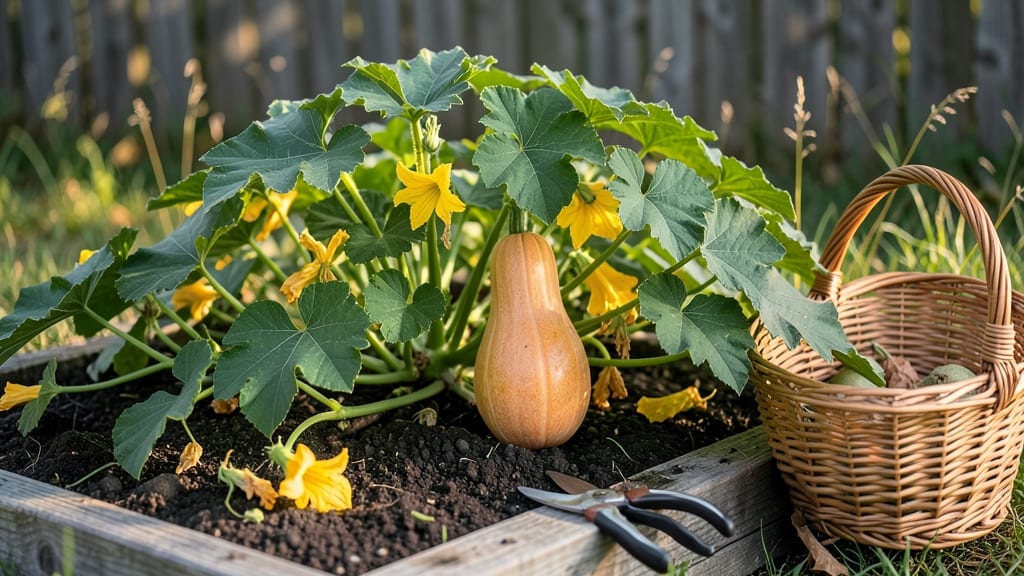
Growing the biggest butternut squash requires exceeding 200 pounds through precise spacing (3-4 feet apart), nutrient-rich compost-heavy soil, and careful watering while avoiding excess nitrogen. Champion varieties like 'Big Max' and 'Mammoth White' deliver the largest yields.
Giant butternut squash thrive when their sprawling vines spread out—think of them like sunbathing lizards, needing ample space to soak up warmth and nutrients. 🌱 The secret lies in balancing organic matter (like well-rotted manure) with proper drainage, since soggy soil stunts growth.
I’ve seen firsthand how a single vine can stretch 20 feet when given the right conditions, producing multiple 50-pound squash. The key is patience: these giants take 90-110 days to mature, so timing your planting after the last frost is everything.
What often trips up growers is nitrogen—too much makes vines lush but squash small. Instead, focus on phosphorus and potassium for root development and fruit expansion. Varieties like 'Big Max' aren’t just lucky—they’re bred for massive fruit load while maintaining sweetness.
For best results, I recommend side-dressing with compost every 3-4 weeks and using drip irrigation to keep moisture consistent without overwatering.
💡 In This Article
- Butternut Squash Growth Factors for Record-Breaking Size
- Step-by-Step Guide to Cultivating Giant Butternut Squash
Butternut squash growth factors for record-breaking size
Butternut squash achieve record sizes through a combination of biological factors that maximize their growth potential. The most critical element is the plant's sprawling vine system, which can extend up to 20 feet when given optimal conditions.
These vines develop an extensive root network that absorbs nutrients and water from a wide area, allowing the squash to grow significantly larger than their compact cousins like acorn squash. The ideal temperature range for this growth is 70-85°F, where photosynthesis and nutrient absorption peak.
The squash's size is also directly influenced by its genetic makeup, particularly in varieties bred for giant fruit. 'Big Max' and 'Mammoth White' produce squash weighing over 200 pounds by developing larger flowers and more robust fruit walls that can withstand the weight.
What's fascinating is how the plant allocates resources: it prioritizes fruit growth over vine expansion once the fruit reaches a certain size, which explains why some squash grow so massive while others remain small. 🌱 The key is maintaining a balance between vine health and fruit development through proper nutrient management.
Soil composition plays a pivotal role in this process. Butternut squash thrive in well-draining soil with a high organic matter content—think of it as a nutrient-rich sponge that holds moisture without becoming waterlogged.
The ideal soil mix includes 50-70% compost, along with a balanced fertilizer that emphasizes phosphorus and potassium (like a 5-10-10 ratio) to support root development and fruit expansion. Nitrogen, while essential for vine growth, should be used sparingly to avoid excessive foliage at the expense of fruit size.
Humidity and airflow are equally important. Butternut squash vines benefit from moderate humidity (50-70%) to prevent fungal diseases while maintaining airflow to reduce moisture buildup on leaves.
This balance is crucial because stagnant air can lead to powdery mildew, which weakens the plant and reduces its ability to produce large fruit. In regions with high humidity, spacing vines 3-4 feet apart helps ensure adequate airflow while still allowing the sprawling vines to access sunlight.
Light is another critical factor. Butternut squash are heavy feeders and require 6-8 hours of direct sunlight daily to produce large fruit. The vines grow toward the sun, which maximizes photosynthesis and energy production for fruit development.
Shade cloth or partial shade can reduce yield, so choosing a sunny location is non-negotiable for growing giant squash. Even a slight reduction in sunlight can lead to smaller, less flavorful fruit.
Finally, the plant's natural growth hormones come into play. As the squash develops, it produces gibberellins—plant hormones that promote cell elongation and fruit expansion. This is why butternut squash can grow so large: their genetic makeup encourages rapid cell division and expansion in the fruit.
Understanding this process helps growers time their care routines—such as watering and fertilizing—to align with the plant's natural growth cycles. 💫
For those aiming to break size records, monitoring these factors closely is essential. Small adjustments—like adjusting fertilizer ratios or spacing—can make a significant difference in the final harvest size.
The result is not just a larger squash but one that's also sweeter and more flavorful, thanks to the balanced growth conditions.